


Prostatitis is an inflammatory disease of the prostate gland.It can be infectious or non-infectious in nature.Regardless of the form of the disease, complex treatment of prostatitis is necessary, including drug and non-drug therapy.
Types of prostatitis and treatment
Due to development, infectious and non-infectious prostatitis are distinguished.
The infectious disease is caused by the activity of pathogenic agents that cause inflammation of the prostate.Depending on the type of pathogen, bacterial or fungal inflammation is distinguished.The disease can be triggered both by the activity of opportunistic microorganisms, which are always present in a man’s body, and by sexually transmitted infections, for example, chlamydia or trichomonas.
The disease develops against the background of decreased immunity.In most cases, this type of prostatitis is caused by opportunistic microorganisms, for example, Pseudomonas aeruginosa, staphylococcus.A healthy body is able to suppress infection, but inflammation develops against the background of decreased immunity.
Non-infectious prostatitis is a consequence of a sedentary lifestyle.Its development is caused by congestion in the pelvic organs - impaired blood circulation, lymph flow, or stagnation of prostate secretions.Factors that provoke the development of this form of inflammation:
- hypothermia;
- decreased immunity;
- physical inactivity;
- obesity;
- irregular sex life.
It is believed that congestive prostatitis is a disease of office workers.The disease develops against the background of physical inactivity, as a result of which the metabolism decreases and the trophism of the prostate is disrupted.

A man’s sex life plays an important role in the development of congestive prostatitis.Lack of sexual activity leads to decreased tone of the prostate gland and stagnation of secretions.This provokes swelling of the organ and the development of inflammation.At the same time, excessive sexual activity (more than 2-3 sexual acts per day) leads to depletion of the organ and can also cause the development of the disease.
According to the nature of the course, prostatitis is divided into acute and chronic.The acute form is characterized by an exacerbation of specific symptoms, including:
- frequent urge to urinate;
- pain and burning in the urethra;
- bladder spasms;
- pain in the perineum;
- erectile dysfunction.
The process of urination is accompanied by severe pain in the urethra, which is caused by compression of the urethra by the enlarged prostate.
Acute prostatitis can be treated quite successfully with the timely administration of adequate drug therapy.In the absence of correct treatment, it becomes chronic.This disease is accompanied by a weakening of a man’s sexual function and various disorders of the urinary system.
Chronic prostatitis can be either infectious or non-infectious.In both cases, it is characterized by periodic exacerbations, during which symptoms become acute.Exacerbations of the disease are associated primarily with decreased immunity.
An integrated approach to treatment
Before starting treatment, the patient must undergo all examinations to identify the type of inflammatory process and the type of pathogen.To do this, an analysis of the prostate secretion is performed, an ultrasound and an MRI of the organ are performed.
Comprehensive treatment of prostatitis includes:
- drug therapy;
- increasing immunity;
- physiotherapeutic methods;
- diet therapy;
- lifestyle change.
Drug therapy depends on the form of the disease.For infectious inflammation, the main line of treatment is antibacterial drugs.Their selection is made based on the results of the prostate analysis.
For non-infectious prostatitis in the acute stage, anti-inflammatory drugs are used for symptomatic treatment.The main part of therapy is carried out with drugs that normalize the functionality of the organ.
Complex treatment of prostatitis necessarily includes taking medications to improve immunity.These can be either local agents (rectal suppositories) or immunomodulators in tablets.The choice of drugs is made only by a doctor.
For bacterial prostatitis, the basis of treatment is to fight infections; for stagnant prostatitis, it is to improve the functionality of the gland.
Antibacterial therapy
Comprehensive treatment of prostatitis begins with drugs to relieve symptoms, which normalize prostate function and improve well-being.For infectious prostatitis, the basis of therapy is antibiotics.
The following groups of drugs are used for treatment:
- penicillins;
- tetracyclines;
- macrolides;
- fluoroquinolones.
Penicillins and tetracyclines are used quite rarely in urological practice due to the low effectiveness of treatment and a large number of side effects.Pathogenic microorganisms that provoke the inflammatory process quickly develop resistance to the action of drugs of this group, which negatively affects the therapeutic effect of the drugs.
Nevertheless, a fairly good result is achieved by taking combination drugs.
In most cases, macrolide medications are prescribed.Their advantages lie in a wide spectrum of action, good tolerance by organisms and high bioavailability, due to which the components of the drug penetrate into the prostate tissue.
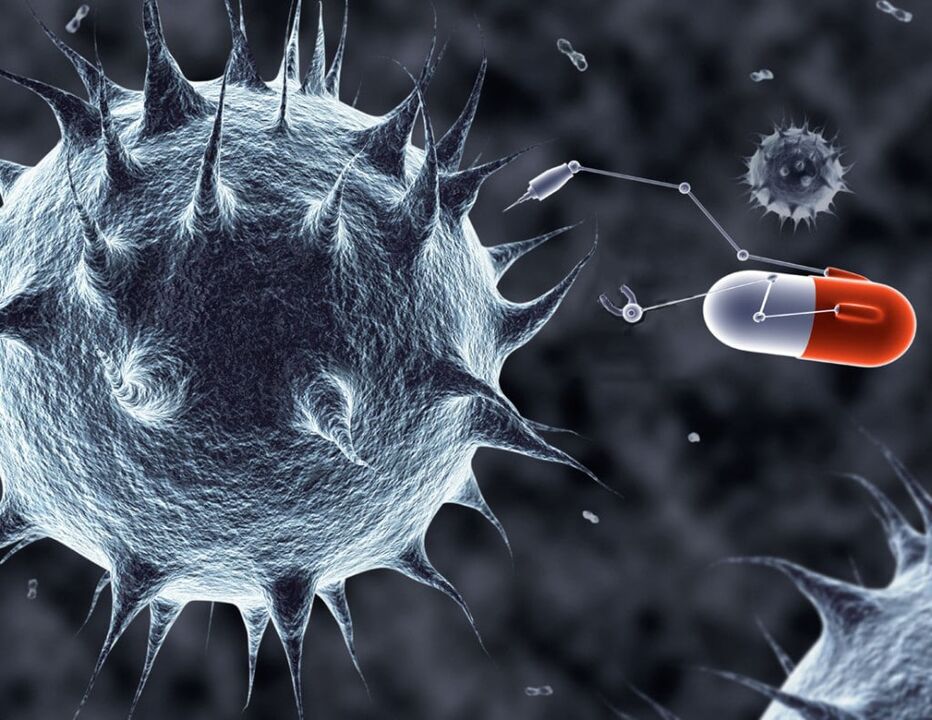
Recently, doctors increasingly prefer drugs from the fluoroquinolone group.These are broad-spectrum antimicrobial drugs that have a number of advantages over conventional antibiotics.
Since fluoroquinolones, unlike antibiotics, are completely synthetic drugs that have no natural analogues, treatment with these drugs is more effective due to the lack of development of resistance in pathogens.
Fluoroquinolones quickly penetrate prostate tissue, are well tolerated by the body and rarely cause side effects.Most often, doctors prescribe drugs containing levofloxacin.Therapy takes at least 28 days, the medicine is taken 1-2 tablets.The exact dosage and dosage regimen is selected by the doctor individually.In some cases, intramuscular administration of the drug may be prescribed, in which case the course of treatment is reduced.
Anti-inflammatory drugs
For the complex treatment of chronic prostatitis of a non-infectious nature, anti-inflammatory drugs are used.
Such medications have a symptomatic effect, eliminating pain and stopping the inflammatory process.It is advisable to prescribe anti-inflammatory drugs in suppositories - thanks to this form of release, the active substance enters directly into the tissue of the prostate gland.
For infectious inflammation, anti-inflammatory drugs are prescribed in short courses to relieve symptoms, but for non-infectious prostatitis they constitute the main line of treatment, since antibiotics are not used for this form of the disease.
To treat congestive prostatitis, bioactive drugs are often used to normalize the functionality of the prostate.
As a rule, these are preparations based on extracts from the prostate gland of young bulls.The drug improves prostate trophism, relieves inflammation and reduces swelling.For non-infectious prostatitis, it is used over a long course to treat inflammation.For bacterial inflammation of the prostate, this drug is indicated to restore the functioning of the organ after antibiotic therapy.
For congestive prostatitis, suppositories with propolis and bee products, ichthyol or pumpkin oil are often prescribed.Such medications are aimed at normalizing prostate trophism, have an anti-inflammatory effect and increase local immunity.
Drugs to enhance immunity
During complex treatment of prostatitis, the prostate gland is exposed to various medications.To avoid re-development of the disease after a course of treatment, a set of measures to increase immunity is indicated.
For this purpose the following is prescribed:
- preparations with zinc;
- tablets with echinacea extract;
- complex of vitamins;
- vitamin E.
For the normal functioning of the prostate gland, zinc, selenium and vitamin E are necessary. Urologists often prescribe bioactive dietary supplements high in these substances.
It is also recommended to take a course of vitamins designed specifically for men.Such drugs contain a complex of substances aimed at normalizing the functioning of the genitourinary system.
To reduce the risk of exacerbations and recovery after antibacterial therapy, injections of echinacea extract are prescribed, but this drug is no less effective in tablet form.
For chronic prostatitis, a complex of vitamins should be taken twice a year to reduce the risk of exacerbation.
Physiotherapy and massage
For chronic prostatitis, physiotherapy is prescribed to eliminate congestion.Usually acupuncture, current and magnetic methods of influence, darsonvalization are used.For bacterial inflammation, such methods are not used, as they can provoke the spread of pathogenic agents throughout the body through the bloodstream.
If prostate trophism is impaired, rectal massage is indicated.Such procedures are carried out by a qualified specialist - a urologist or proctologist.The massage course ranges from 10 to 15 procedures.
Physiotherapy stimulates blood circulation in the pelvic organs, eliminates lymph stagnation and normalizes the outflow of prostate secretions.A course of procedures allows you to restore normal functioning of the organ and has a positive effect on potency.
Surgical treatment
Surgical treatment of prostatitis is carried out only in case of complications.
With infectious prostatitis, the formation of a prostate abscess is possible.This requires immediate hospitalization of the patient and manipulation, during which the abscess is opened and its contents are removed.
With chronic prostatitis, narrowing of the urethra is possible, which leads to acute urinary retention.In this case, surgery is performed and a catheter is installed to remove urine.In addition, in severe cases of the disease, fibrosis may develop, as a result of which scars appear on the prostate tissue.In this case, an operation is performed during which areas of compaction are removed using a laser.
Lifestyle and nutrition
Comprehensive treatment of prostatitis includes changing lifestyle, normalizing nutrition and giving up bad habits.The diet for prostate inflammation is not strict, but excludes any fast food, semi-finished products, and smoked foods.Alcohol and smoking must be avoided.
You should include foods that are good for men's health in your diet:
- avocado;
- pumpkin seed oil and olives;
- nuts and honey;
- citrus;
- pumpkin seeds;
- fermented milk products.
If you have congestive prostatitis, you should exercise regularly.Physical activity should be aimed at normalizing blood circulation in the lower body.
An important role is played by the patient's sex life.If you have prostatitis, you need regular sex, at least 3 times a week.At the same time, excessive sexual activity is unacceptable, as it depletes the prostate.
Otherwise, adequate drug therapy, proper nutrition and giving up bad habits will help you get rid of prostatitis.However, after inflammation, a man is recommended to visit a urologist annually and undergo a comprehensive examination of the prostate gland.